The Brief
Calorie and fasting-tracking apps are one of the most saturated categories on Google Play, and most of them lose users within weeks. The pattern is almost always the same: logging food is tedious, and tedious things get abandoned. The brief for Kalori AI was self-directed — build a nutrition and fasting assistant where the app does the interpreting, not the user typing macros by hand every meal.
The Approach
Kalori AI was built and shipped by a single developer, using an AI-accelerated workflow for the app itself and for the feature set inside it: scaffolding the app structure, generating first-pass content and copy, and iterating on the fasting/tracking logic quickly enough to test and refine the core flow before investing in polish.
Where AI Fit In
Inside the product, AI is used to turn raw logging input into something closer to a personalized nutrition and fasting insight, rather than a static number on a dashboard. The engineering judgment — what to track, what to surface, and where the app should stay simple instead of adding another settings screen — stayed with the developer; AI accelerated the implementation, not the product decisions.
The Outcome
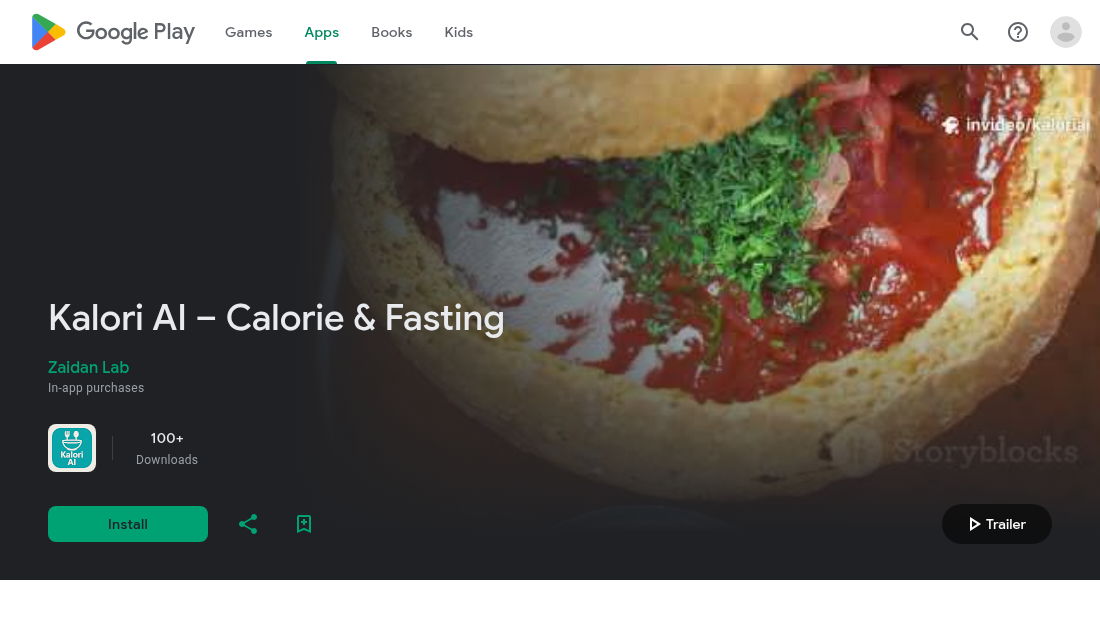
Kalori AI is live on Google Play today, published under the ZaidanLab developer account. It stands as a working example of the same AI-accelerated approach used across ZaidanLab's client engagements: ship a focused product fast, with AI doing the heavy lifting on implementation while a senior developer owns the architecture and decisions.