The Interaction Problem
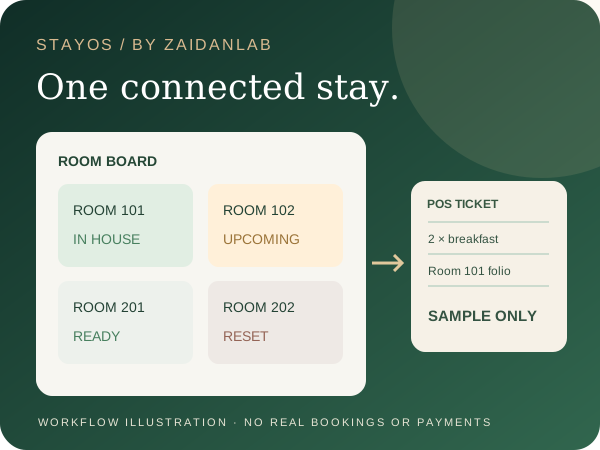
Hotels and restaurants often move between reservation lists, room status and food-service tickets. StayOS is an independently designed UI/UX portfolio prototype showing how those steps might connect. It is not built for a client, not a live hospitality product and not a copy of a commercial template. The cover is a labeled workflow illustration, not a screenshot.
Try the Fictional Workflow
Open the StayOS demo →
Explore the overview, open Reservations and create a sample stay in an available room. Check in an arrival, switch to Restaurant POS, add menu items and send a demo ticket to a table or checked-in room. Room tickets appear in the fictional guest folio. Mark a ticket served, then simulate check-out and reset the room through the housekeeping state. Refresh or use Reset demo to restore the initial sample.
Working UI, Bounded Rules
The interface is responsive and the interactions update the same browser-tab state. A booking checks guest capacity, calendar dates and overlapping room reservations. Check-in needs a current reservation and a ready room. Check-out marks that room as awaiting housekeeping until manually cleared. Restaurant ticket quantities use integer cents; room charges require a checked-in fictional guest. The overview's shift brief is explicitly a deterministic simulation, not an AI model.
Sample Data and Validation
Harbour House, all guest names, eight rooms, menu items and illustrative AUD values are fictional. Prices do not establish real availability, a market offer, revenue or taxes. Source tests cover room/date guards, lifecycle transitions, ticket validation and folio linkage. Headless browser checks exercised reservation, check-in and room-folio ticket flows at phone and desktop widths before publication; those checks do not certify every device or assistive technology. The visual design and implementation are original, not a reproduction of any vendor screenshots or assets.
What This Demo Does Not Do
There is no real reservation, inventory feed, server, user account, tenant isolation, identity verification, payment processing, card capture, restaurant kitchen integration, email or AI provider. Changes remain in this browser tab and disappear on refresh. The example folio does not collect or settle charges. Avoid entering real personal information. Production hospitality software would require access controls, audit trails, payment and tax rules, privacy review, availability reconciliation and operational testing.
 Chat via WhatsApp